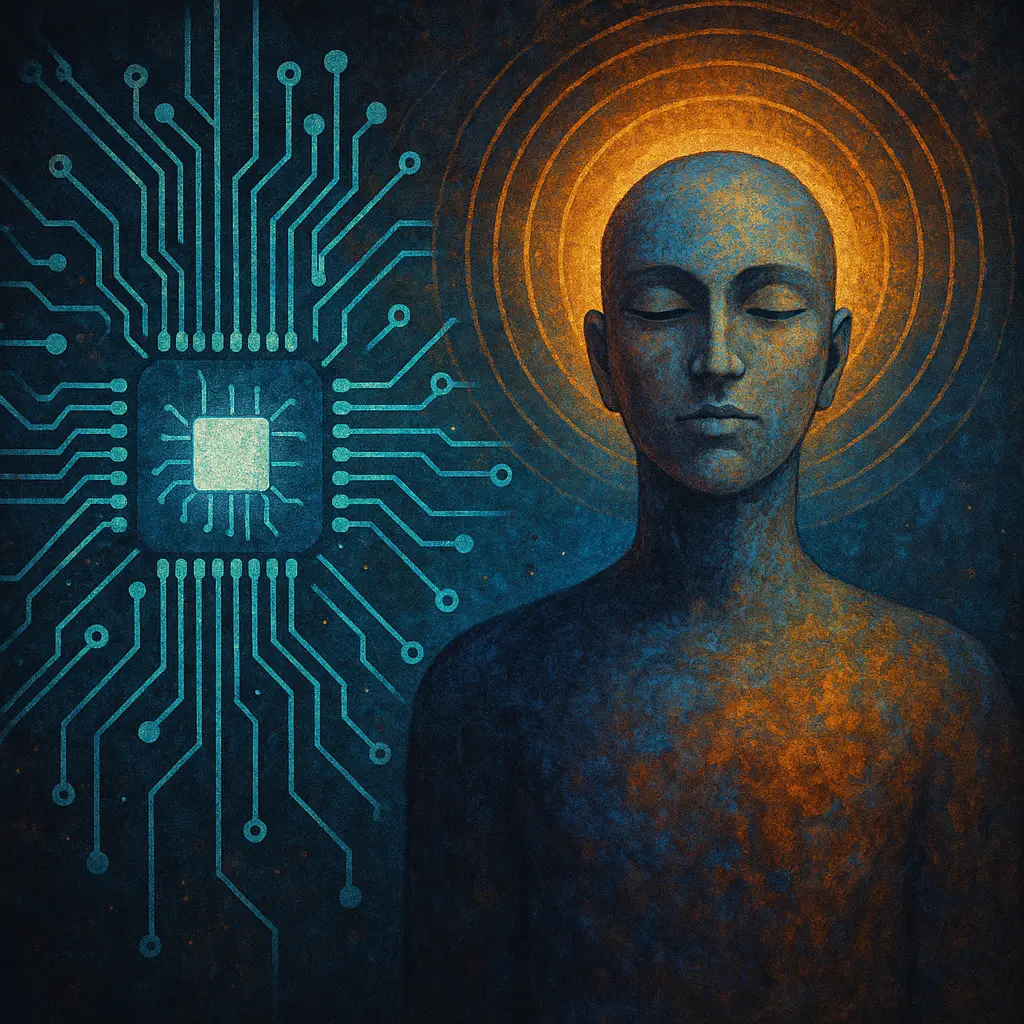

In an age where creativity increasingly relies on digital tools, it’s critical to ask: who are these tools designed for, what is the efficacy of their deployment, and who might be left out? From music to gaming and health education, technology is often positioned as a leveller for equitable accessibility. But influential factors across design, uptake, expressiveness and cultural relevance tend to be shaped by deeper community forces. What we may call the social determinants of tech in the arts.
These forces include access to tech infrastructure, representation in design teams, cultural framing of value, and the implicit and explicit biases that shape what gets built, funded, promoted or celebrated. Just as social determinants impact health outcomes, they also influence how creative technologies evolve, how they are distributed and accessed, and ultimately who they serve. Telemidi’s services apply across music, education, gaming and health, where remote collaboration defines the mode of engagement. Where design choices, prioritising decentralisation, human factors, and co-creation, reflect an intentional response.
From Collaboration to Isolation
By the late 1980s, MIDI-enabled devices and faster computing power brought the means of music production into domestic spaces, dramatically shifting the landscape of collaboration. The 1990’s ushered in the rise of personal computer DAWs, online forums, and shared tutorials, the home studio replaced the shared studio, and the solo producer began to eclipse the ensemble.
Digitising audio allowed for new horizons of sound design and production, a process that often validated a new kind of autonomous artist; one who is software-literate, and often working alone. Meanwhile, digital genres like EDM and hip hop brought forward a rejection of the acoustic norms that sat at the core of historical music creation, by celebrating repetition, cut-up audio textures, and machine logic.
By the time pioneering digital artists like DJ Shadow and Moby were charting globally, the sonic identity of ‘the studio as instrument’ was fully embedded. As Diduck noted, artists were toiling alone, building tracks from MIDI-triggered samples and loops, rather than co-performing in real time. The emergence of live-looping performers like Ed Sheeran or Tash Sultana further blurred the lines between authenticity and mediation, using digital layers to simulate ensemble presence while performing solo.
What’s often overlooked is that this shift, from group to individual, from co-presence to pre-curation, reflects deeper social conditions. Solitary music-making, while empowering for some, also mirrors broader patterns of isolation, neurodivergence, or exclusion from institutional settings. Technology, in other words, isn’t neutral. It can either reinforce silos or build bridges.
Distributed Presence as an Equity Model
Rather than simulating proximity, Telemidi’s framework enables distributed presence, an approach that assumes each participant operates from a unique temporal, cultural, and technological context. Telemidi is not simply a latency solution. It’s a human-centred design principle that explicitly connects human actors within a broad network of non-human agents, a philosophy aligned with inclusive practices, and the social conditions of our time. When local actions are respected across the network as equal and valid contributions, and not subordinated as slaves to a master clock or centralised logic, systems immediately become more equitable.
MIDI plays a key role here. Rather than transmitting flattened audio, it transmits intentionality: mapped gestures, control signals, and decision points. As Levaux and others have shown, the musical languages encoded in digital systems are never free from history, they carry traces of genre, geography, and spiritual lineage.
Designing Systems for Belonging
The aesthetics of failure, celebrated in glitch and noise-based genres, are a reminder that brokenness can be expressive. Støckert et al. frame this as a digital honesty, where system limitations become part of the texture. It’s within this openness, to imperfection, to cultural multiplicity, that equity-driven systems thrive.
Global traditions reinforce this. In Hindu philosophy, Kāla is a concept of timeframes that span from microseconds to cosmic lifespans, while music is used to map and transcend temporal experience. In these contexts, rhythm is not merely a technical grid, but a site of spiritual connection, and any system that claims to foster inclusion must account for such plurality.
Conclusion
The tools we use in the arts are never just functional. They reflect decisions about who matters, what counts as valid, and how creativity flows between people. By interrogating the social determinants of tech, we can design systems that do more than replicate access. We can build for belonging.